Otto Washington · 14 October 2026
Nest Success in Blue Oak Canopies: Linking Woodland Structure to Avian Population Stability
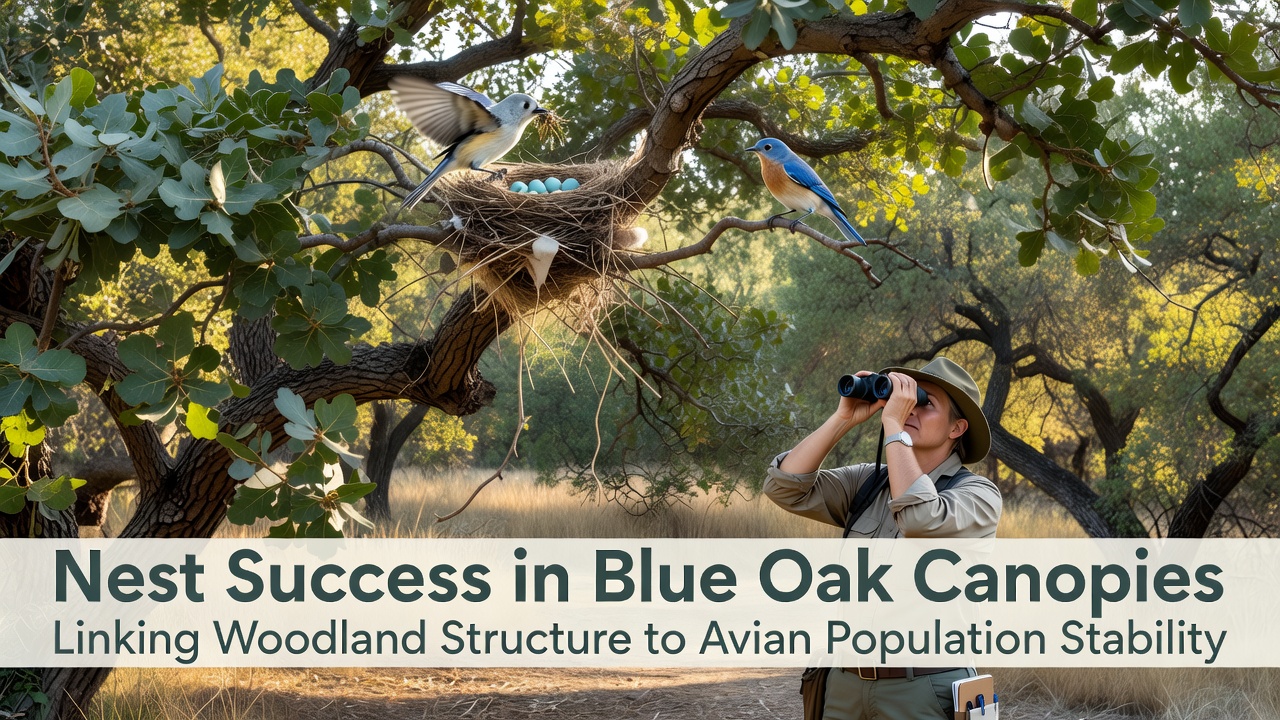
Blue oak woodlands across California support a range of avian species that depend on specific structural features for successful nesting, and researchers have documented how canopy density, tree spacing, and understory composition directly shape nest outcomes in these systems. Data from long-term monitoring programs indicate that blue oak canopies with moderate to high foliage cover often correlate with higher fledging rates because they provide concealment from predators while allowing access to insect prey. Observers note that woodland patches with varied tree heights create layered habitats where different bird species can establish territories without intense competition.
Structural Elements That Shape Nesting Outcomes
Canopy closure percentages between 40 and 70 percent frequently appear in studies as optimal for many cavity-nesting and cup-nesting birds, since this range balances shade with enough light penetration to support the invertebrate communities that parents rely on during chick-rearing. Tree diameter at breast height measurements above 30 centimeters also matter because larger boles offer more stable platforms for nests and reduce sway during wind events that could dislodge eggs or young. Researchers tracking color-banded individuals have found that sites with scattered dead limbs inside the canopy host greater numbers of woodpecker excavations, which secondary cavity users then adopt in subsequent seasons.
Understory shrub density influences ground-foraging species differently than canopy dwellers, and plots with moderate shrub cover show improved nest success for species that build low in the vegetation while avoiding excessive predator access routes. Soil moisture gradients beneath the oaks further affect leaf litter depth, which in turn supports the arthropod populations that sustain nestling diets throughout the breeding period.
Avian Species and Their Responses to Canopy Features
Acorn woodpeckers maintain communal territories in blue oak stands where mast production remains reliable, and their granary trees often sit within clusters of mature oaks that also provide nesting cavities nearby. Oak titmice and white-breasted nuthatches select sites with high horizontal branch density, which allows quick escape flights when corvids approach the nest area. Western bluebirds have demonstrated higher occupancy in patches where canopy gaps permit sunlight to reach nest boxes or natural cavities, creating warmer microclimates for early broods.
Long-term banding data collected by multiple field teams reveal that species with flexible nesting heights adjust more readily when woodland structure changes through selective thinning or natural mortality, whereas specialists tied to specific canopy layers experience sharper drops in reproductive output when those layers become fragmented.
Recent Monitoring Insights from 2026
In October 2026, a collaborative analysis released by university and agency biologists compiled five years of nest camera footage from 28 blue oak sites and showed clear statistical links between canopy connectivity and reduced nest predation rates. The report highlighted that continuous canopy corridors longer than 150 meters supported lower daily predation probabilities compared with isolated patches, a pattern consistent across both rural and exurban landscapes. Those findings align with earlier work from the US Geological Survey on habitat connectivity for woodland birds.
Population-Level Consequences of Nest Success Patterns
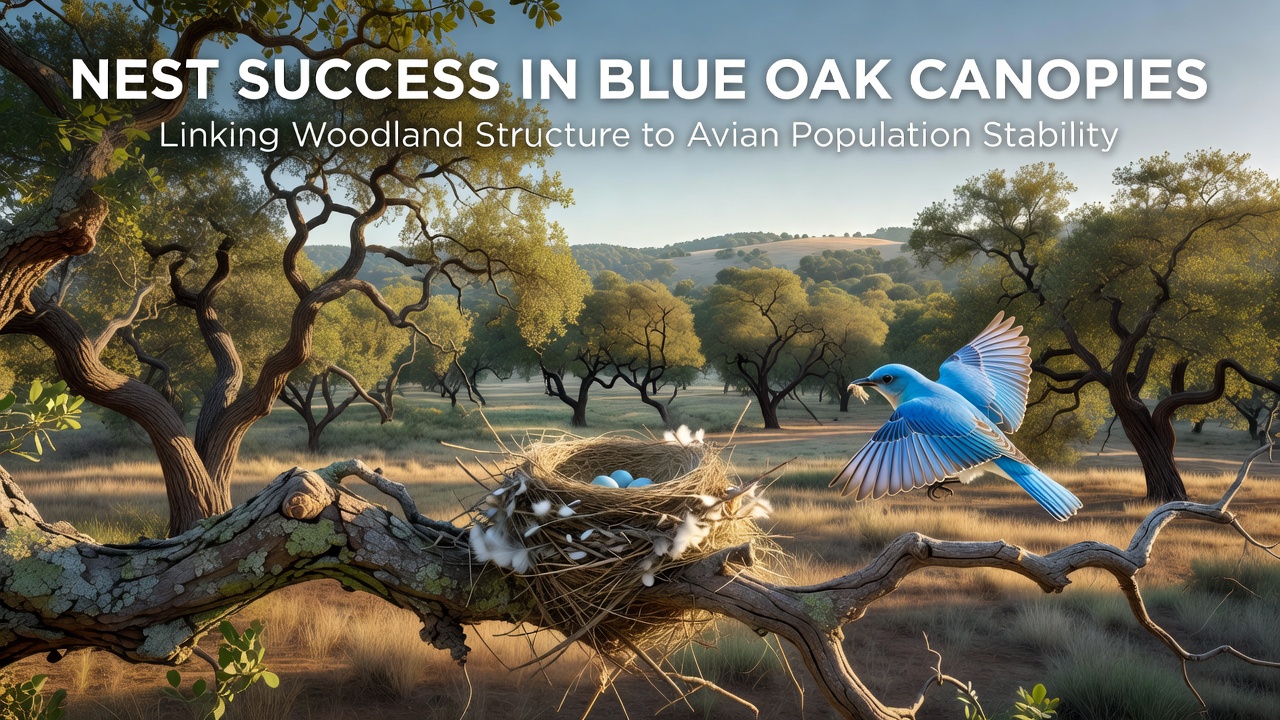
Stable or increasing local populations of oak-associated birds tend to occur where nest success rates exceed 45 percent over multiple breeding seasons, according to demographic models that incorporate both survival and recruitment data. Conversely, sites with persistently low fledging success contribute to regional declines even when adult survival remains moderate, because replacement rates fall below replacement levels. Population viability analyses conducted across the Sierra foothills and Coast Ranges demonstrate that maintaining structural heterogeneity at the stand scale can buffer against stochastic events such as late spring storms that otherwise cause widespread nest failures.
Landscape-scale mapping efforts using LiDAR-derived canopy metrics have identified priority conservation zones where blue oak structural complexity remains high, and these zones coincide with areas supporting the strongest avian breeding densities recorded in recent surveys. Managers who retain legacy trees and limit understory removal in these zones have observed sustained use by multiple breeding pairs across consecutive years.
Management Practices and Structural Retention
Thinning prescriptions that preserve at least 15 mature oaks per hectare while creating small canopy gaps have produced measurable gains in nest success for several focal species in experimental plots. Retaining downed woody debris near nest areas also supports higher insect availability during the critical 10-to-14-day nestling period when energy demands peak. Prescribed fire treatments applied outside the breeding season have shown neutral to positive effects on canopy structure when fire intensity stays low enough to avoid crown scorch, thereby maintaining the foliage cover that conceals nests from aerial predators.
Restoration projects that reintroduce native understory species alongside canopy retention measures further enhance the food web supporting avian reproduction, and follow-up surveys document increased foraging activity by parents raising multiple broods in a single season.
Conclusion
Woodland structure in blue oak systems directly governs the nest success rates that underpin long-term avian population stability, and evidence from field studies continues to clarify which canopy attributes deliver the greatest reproductive benefits. Continued integration of remote sensing tools with ground-based nest monitoring promises to refine management guidelines that sustain both the oaks and the bird communities they support across changing conditions.